| Status: | Active, full but can join waiting list |
| Leader: | |
| When: | Weekly on Friday mornings 11:15 am-12:15 pm |
| Venue: | OLCH - Our Lady Church Hall |
| 2026/27 meetings | |||||
| Sep 4, 11, 18, 25 | Oct 2, 9, 16, 23, 30 | Nov 6, 13, 20 | Dec | Jan 8, 15, 22, 29 | Feb 5, 12, 19, 26 |
| Mar 5, 12, 19 | Apr 2, 9, 16, 23, 30 | May 7, 14, 21, 28 | Jun 4, 11, 18, 25 | Jul | Aug |
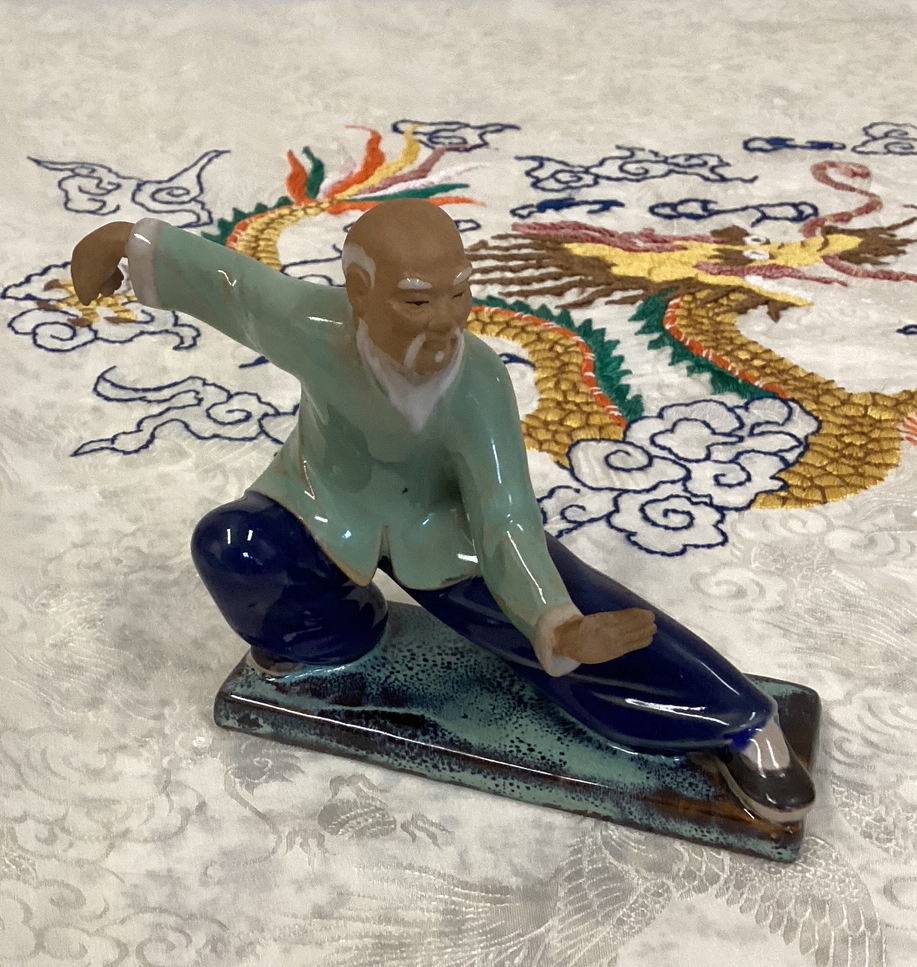
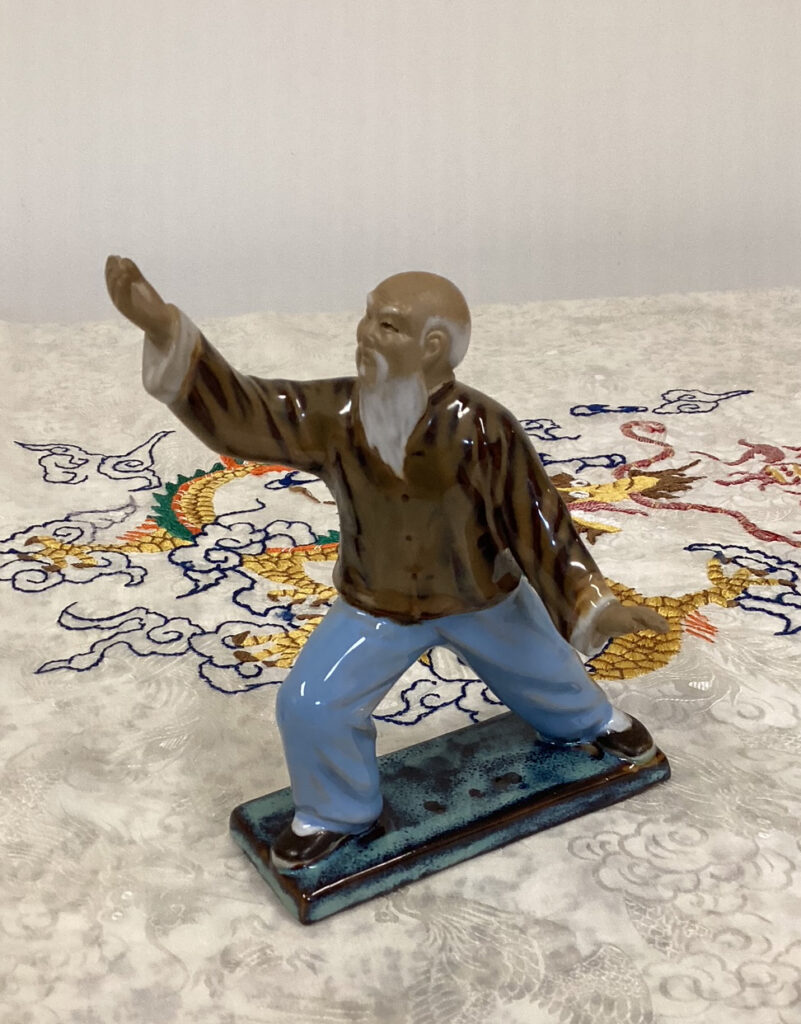
Originating in China, Tai Chi (or T’ai Chi Chuan) is an instantly recognisable, graceful, moving meditation that has spread worldwide. Initially developed as a means of non-aggressive self-defence, it is increasingly practised for its widely acknowledged, all-round health benefits. Focusing the mind solely on the movements of the “Form” helps to bring about a state of mental calm, relaxation and clarity that can relieve the physical effects of stress and help with breathing and balance. The five classes also practice Qigong (or Chi Kung), a method of aligning breath, movement and awareness. Practising these skills each week promotes mobility, strength and balance, as well as general health and well-being.
All five classes are taken by professional tutors, so there is a fee for this class which includes the cost of the hire of the hall.
No special clothing is required; just make sure that whatever you wear does not restrict movement. Shoes should be comfortable and help you balance; most of us wear trainers or something similar.
Unless you have had some previous experience of Tai Chi, as a beginner, you would normally join either Group 2 or Group 4. These well-established classes last for an hour, with only a short break, so to take part you need to be able to stand and keep your balance, unaided, for this length of time.
These classes are very popular and you may be asked to join our waiting list until a vacancy becomes available.
For those of you who want to know a bit more:
Tai Chi is a series of slow, gentle movements; don’t expect an aerobic workout but it is surprisingly hard work, exercising both mind and body. The U3A classes concentrate on the Yang style, particularly the simplified 37-Form developed by Professor Cheng Man-ch’ing (who introduced Tai Chi to the Western world in the early 1960s), the Beijing 24-Form created in 1956 and the traditional Yang Long Form.
Developing patience is the key to gaining the skills needed to practise Tai Chi effectively and to gain the full benefit from it.